Find out in March, not from your accountant in October
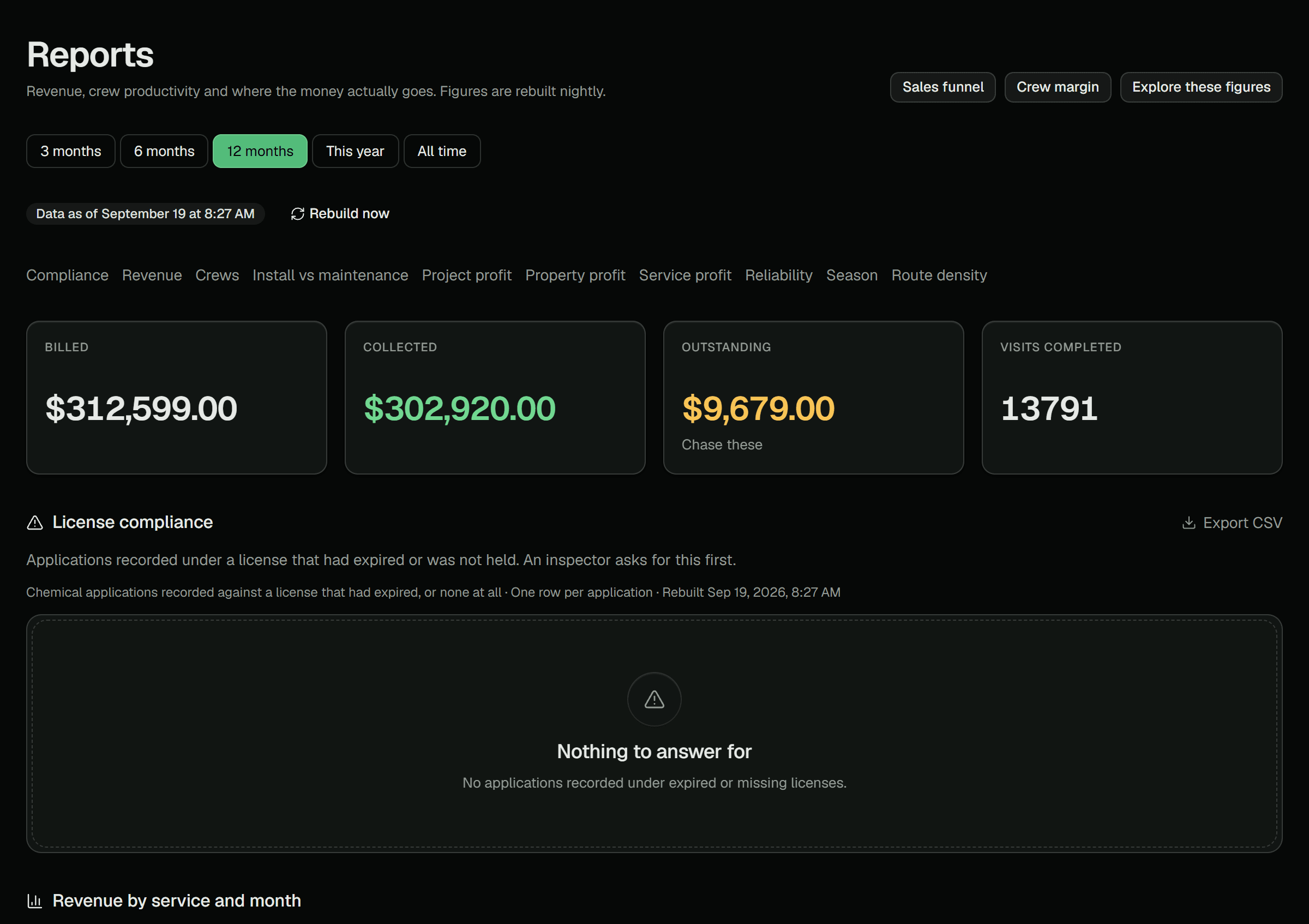
Which services pay, which crews are quick, which properties you are quietly losing money on, and where the hours you paid for never reached an invoice.
The numbers, by the work you actually do
Mowing, spraying, installs, one crew against another, one customer against the rest. Pick a week, a month or a year, look at it, and take it away as a spreadsheet if you want to argue with it.
Which services earn and which do not
Revenue and margin by service line, so the thing you assumed was your bread and butter has to prove it.
Where the hours went
Hours scheduled against hours paid for, crew by crew, and where the overtime keeps happening.
Which customers are worth it
Revenue by property and by customer, and who takes the most visits to earn it.
Every month, traceable to a job
Any month's income opens up into the visits and projects it came from.
The jobs that lose money quietly
A recurring job that costs more in labor and material than you charge does not announce itself. It just sits on the schedule for three years. This puts the cost against the price on every one of them and tells you which are losing, which are thin and which are fine.
Cost against price, job by job
Labor plus material against what you charged, with a plain verdict on each: losing, thin, or healthy.
How fast your crews actually are
What you assumed a lawn takes against what it takes. Every estimate you make afterwards is better for it.
Work you did and never billed
Visits with no invoice, invoices with no payment, quotes never finished. Each one links to the thing that fixes it.
A summary every Monday
What came in, who you served, and what you did not collect. Five minutes, once a week.
Before you hire the fifth person
Another truck is a payment, a wage and an insurance premium, and the question is whether the work is there. Put the crew count in and see what your utilization does, and what rate you would have to charge to cover the office.
One more crew, or one less
See what happens to utilization across the properties you already have before you sign anything.
The rate you need to charge
Enter what the office costs — the truck, the insurance, the fuel, the yard — and it works out what an hour has to earn.
Which prices are under water
Lines in your price book that do not clear your overhead, named, so you know what to put up.
Can I take eleven more?
Ask before you say yes on the phone rather than in September when everybody is drowning.
It is your history, and you can take it with you
Everything that ever happened is written down and nothing is quietly rewritten: who changed what, when, and what it was before. All of it comes out in open formats, on every plan, whenever you ask. Leaving is allowed — that is what makes it safe to stay.
Find anything from anywhere
One search box reaches any customer, property, quote or document without hunting through menus.
Nothing is deleted, and corrections are visible
Arrivals, approvals, payments and changes are added to, never overwritten. A correction is a new entry and the old one is still there.
The whole lot, whenever you want it
Customers, properties, plans, invoices, payments, hours, photographs and history, in formats anything can open.
Ask a question about your customers
Filter by what you know about the property, the service history and how they pay, and get a list you can actually ring.
Keep looking around
Put the whole thing in one place
No card required. Unlimited seats on every plan.